A deep history of client success.
Grounded in a complete understanding of your project’s specific challenges, ADC delivers original and compliant solutions for design, management, and operational needs.

Falling Water
Bonney Lake, WA
Design Flow: 75,000 gallons per day
Treatment: Membrane bioreactor (MBR)
Dispersal: 50-zone pressurized gavel bed system
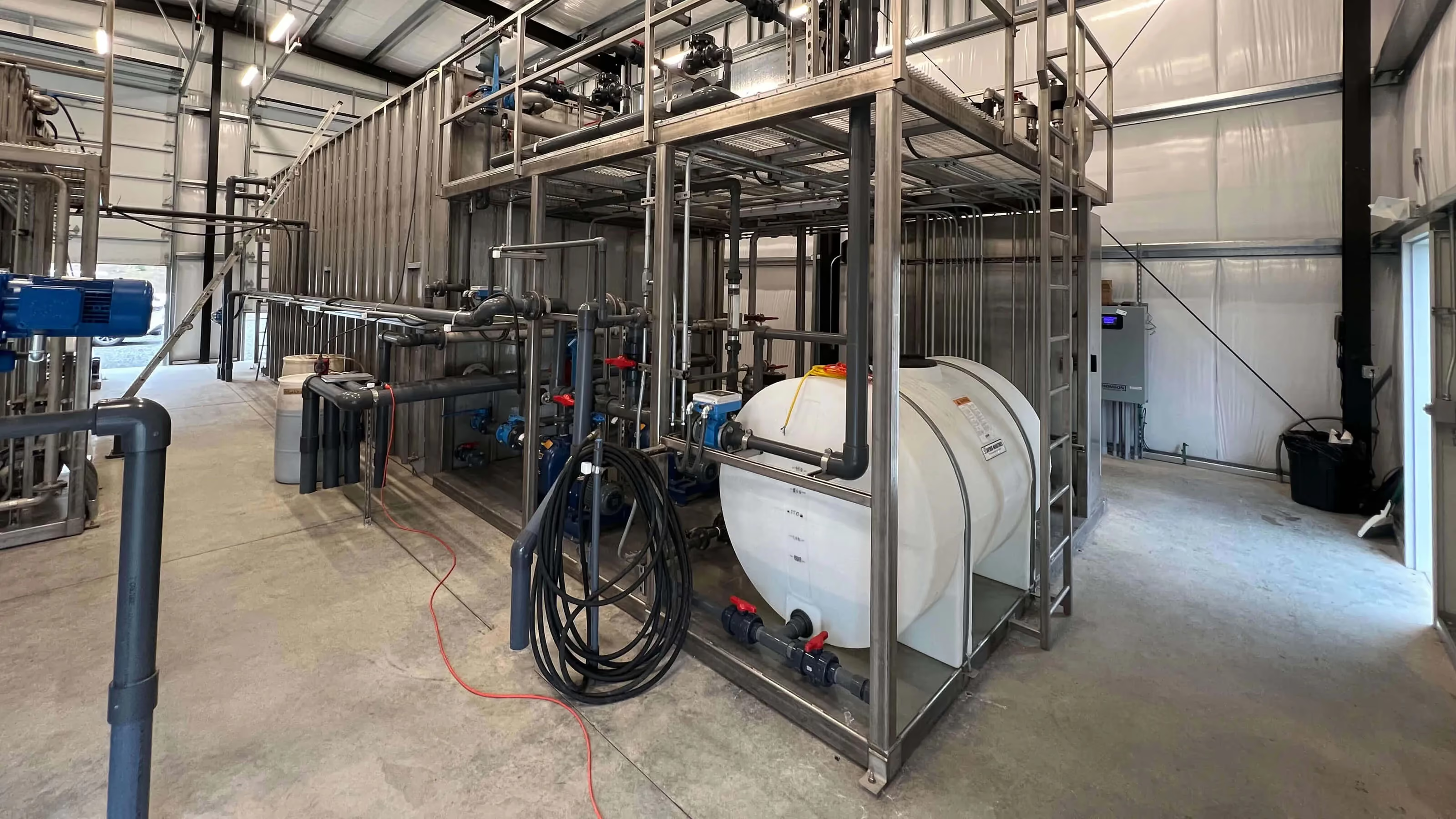
A wellhead protection and critical aquifer recharge area, Falling Water presented a unique challenge due to key zoning limitations. Our first-of-its-kind solution achieved less than 10 nitrogen on the effluent in a robust, reliable, and compact system. Water experts from across the globe have traveled to survey and learn from our solution, which set a new standard for the entire Washington State Department of Health.
Ash Fork
Ash Fork, AZ
Design Flow: 340,000 gallons per day
Application: Developing brand new community infrastructure to collect and treat wastewater to Class A+ effluent for reuse
:
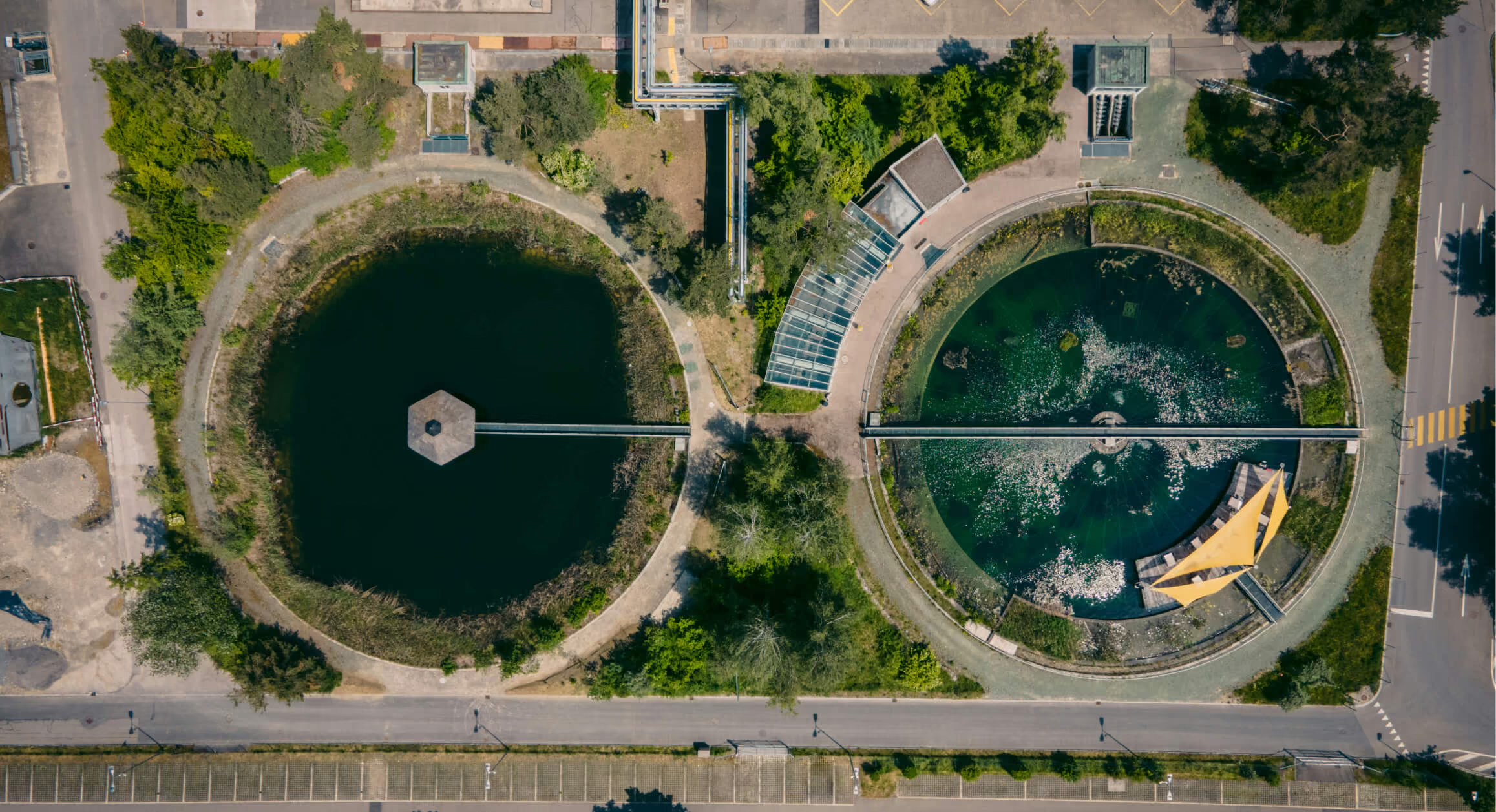
In order to kickstart its community revitalization and support new commercial growth, the town of Ash Fork needed to get off of their current septic-based systems. Further, the town lacked community-wide infrastructure to support a centralized treatment system, so any solution needed to be streamlined, reliable, and affordable while meeting all modern standards.
Working with town managers, ADC developed a preliminary engineering report for a modern wastewater collection, treatment, and reuse system. We helped convey the proposed strategy to the community, and submitted plans for funding from the United States department of Agriculture (USDA), Arizona Water Infrastructure Financing Authority (WIFA), and the United States Department of Housing and Urban Development (HUD).
Casetta Lago
Woodinville, WA
Design Flow: 14,500 gallons per day
Treatment: Membrane bioreactor (MBR)
Dispersal: Nine-zone pressurized gavel bed system
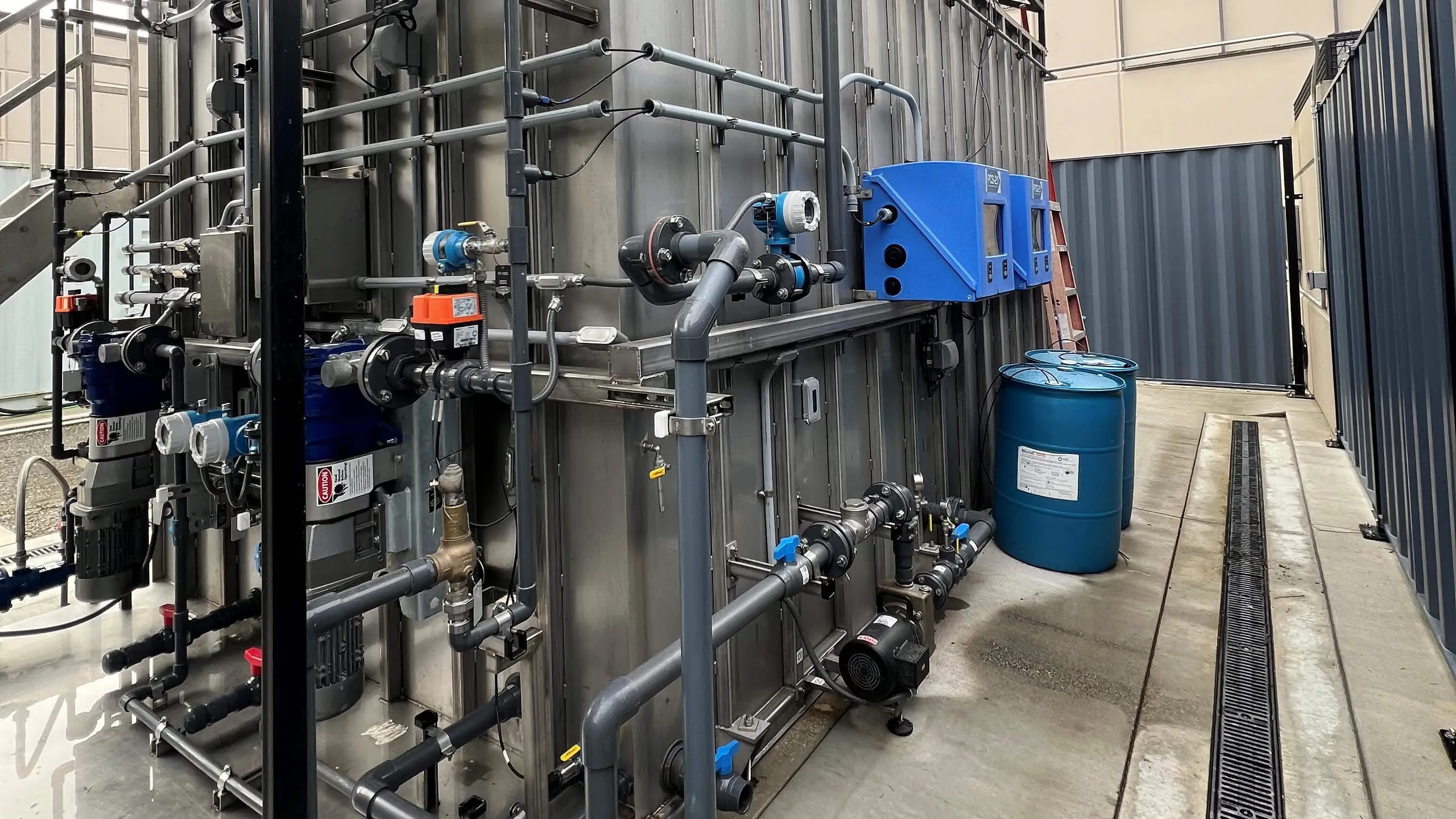
After previous operators had allowed the Casetta Lago system to slip out of compliance and accumulate a growing list of maintenance issues, troubles culminated in a freeze that caused an extreme system malfunction.
Ownership called ADC to set things right.
After expeditiously performing critical repairs, ADC took over operations and brought the the Casetta Lago system back into compliance.
Our philosophy of top-down management and continual system inspection works to prevent these kind of unpleasant surprises. It’s one of the many reasons our clients trust us.
Colorado River Sewage System Joint Venture
Parker, AZ
Design Flow: 0.9 million gallons per day (expandable to 1.2 MGD)
Treatment: Packaged membrane bioreactor (MBR) producing Class A+ effluent
Application: Full replacement of a 1972 treatment plant serving the Town of Parker and the Colorado River Indian Tribes
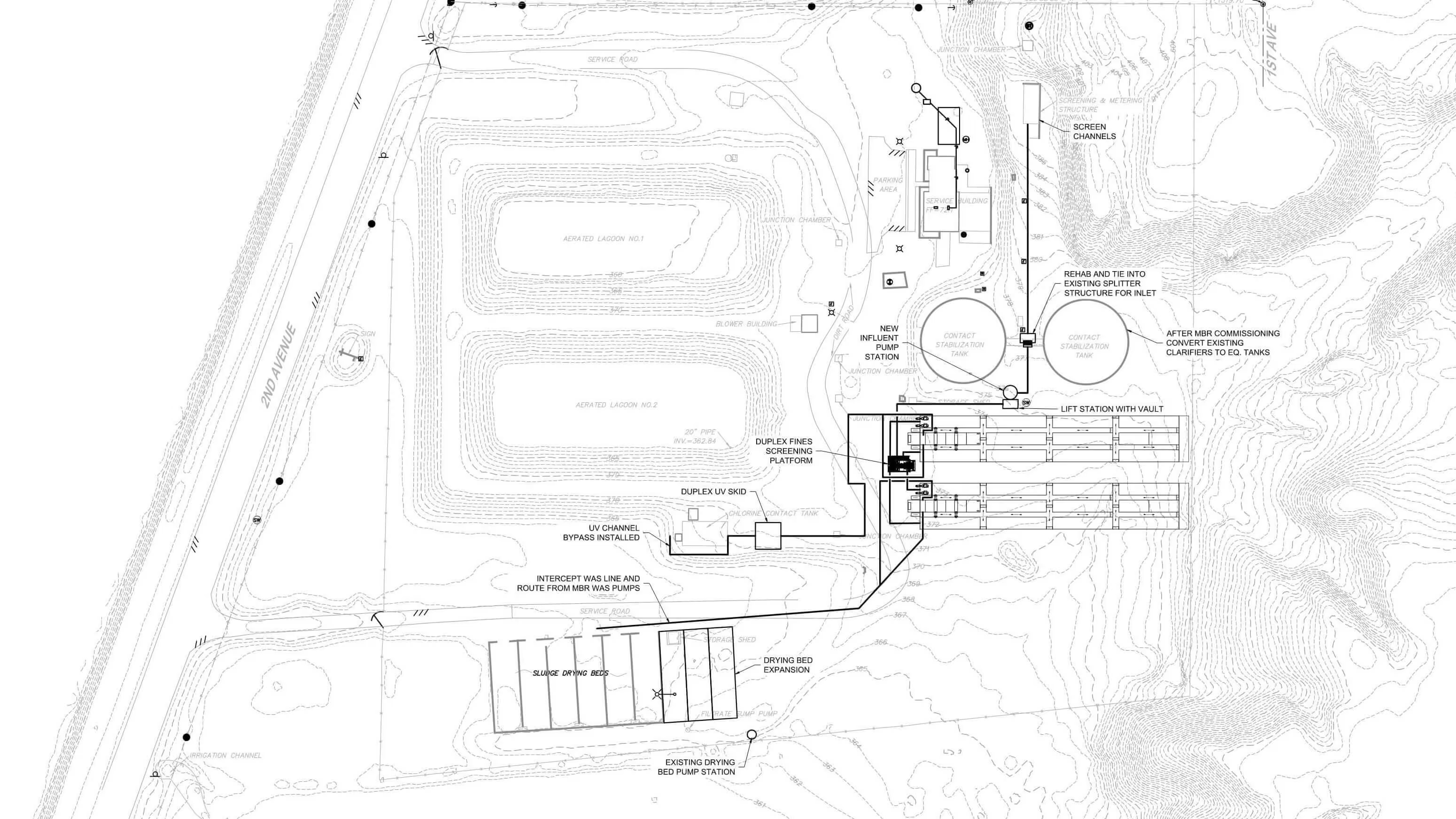
When ADC assessed the Joint Venture's 50-year-old plant on the banks of the Colorado River, we found failing structures, unreliable disinfection, and a facility that could no longer protect the river it discharges to. A prior replacement concept was estimated at more than $65 million, well beyond the community's reach. ADC's preliminary engineering report cut that to roughly $20 million with a packaged MBR solution, then helped assemble the funding to build it: WIFA loans, congressional appropriations, and USDA support.
Tusayan
Grand Canyon, AZ
Project: Water reclamation facility modernization
Construction Cost: $5.4 million
Application: Like-for-like rehabilitation restoring reliability without changing process or capacity
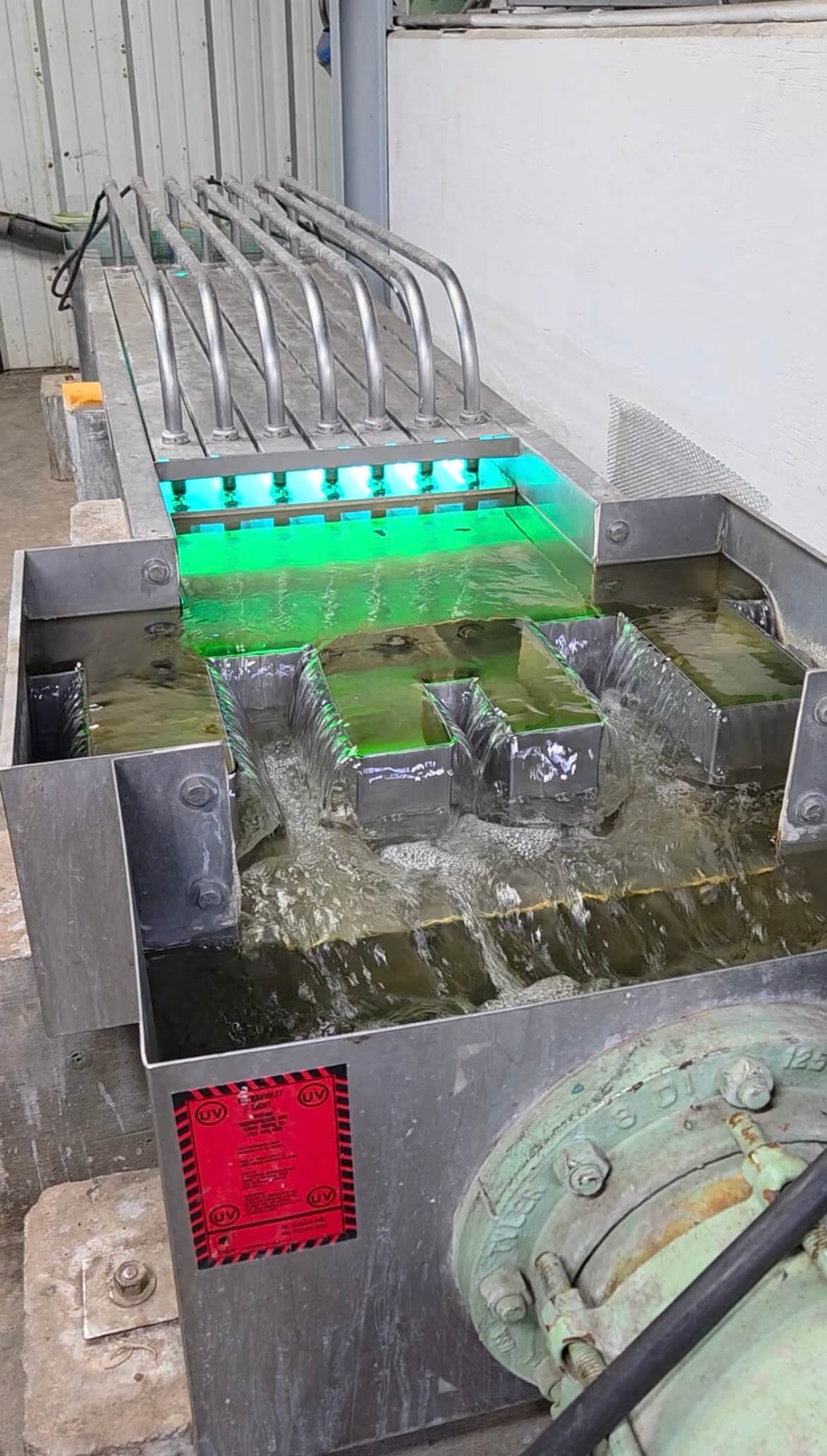
Serving the gateway community to Grand Canyon National Park, Tusayan's water reclamation facility had reached high risk of failure across nearly every system: aeration, disinfection, sludge processing, backup power, and the headworks lift station. ADC delivered the full project lifecycle for the Tusayan Sanitary District: WIFA funding coordination, design, bidding, and construction administration. The two-phase rehabilitation, now under construction, replaces pond liners and aeration equipment, upgrades UV disinfection and headworks screening, and adds backup sludge dewatering, standby power, and SCADA integration. All within a single construction season.
Elfrida
Elfrida, AZ
Project: Water supply rehabilitation and expansion
Storage: New 300,000-gallon welded steel tank
Application: System-wide rehabilitation of a 1960s-era groundwater system funded by a $1.97 million WIFA grant
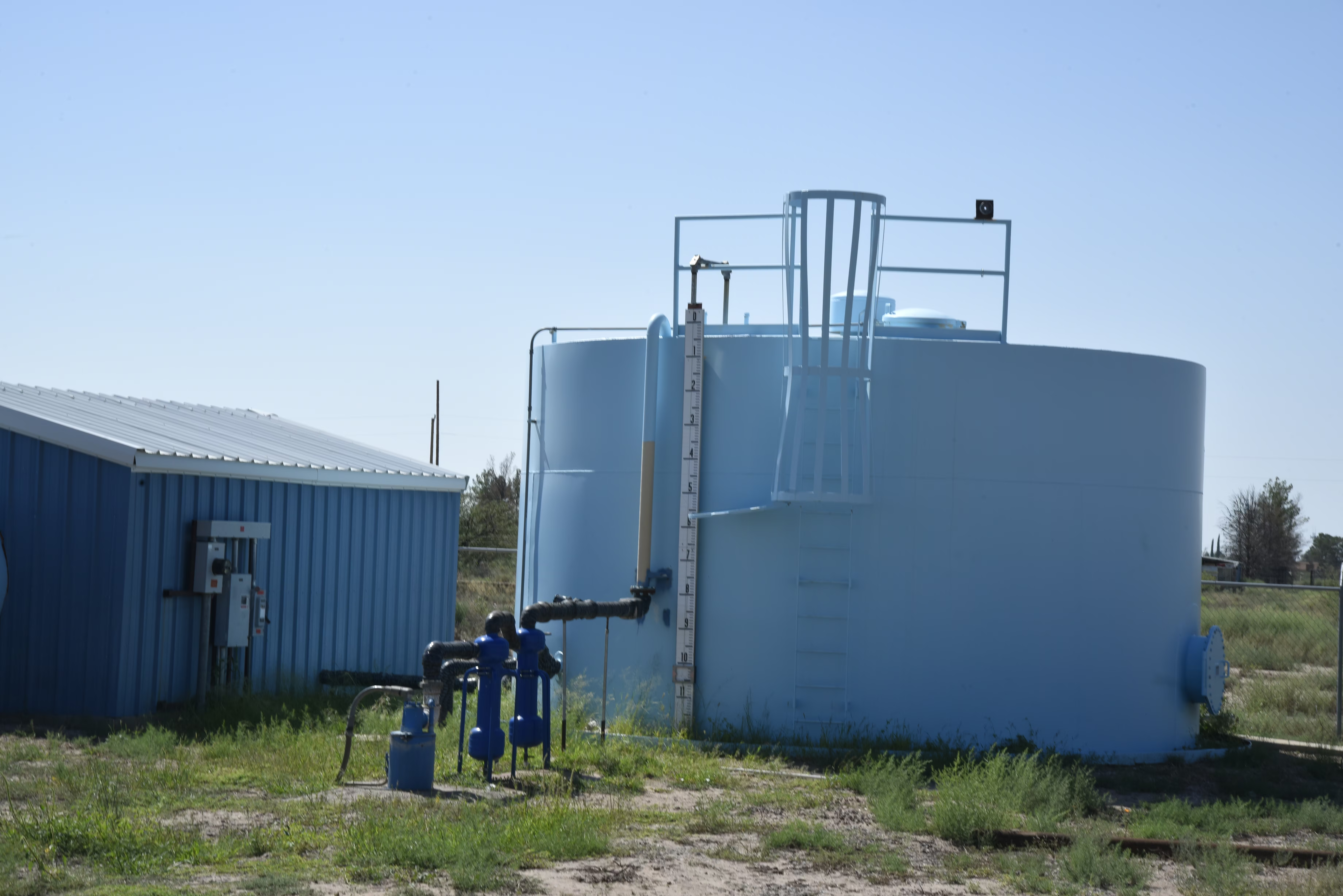
Elfrida's water district was running on just 80,000 gallons of total storage across two aging tanks, declining wells, and manual chlorination with no failure alarms. ADC designed a complete fix: a new water campus with a 300,000-gallon storage tank, rehabilitated wells with automated chlorination and SCADA, and 7,300 feet of new 8-inch transmission main that loops the system and eliminates dead ends. ADC secured ADEQ approval, ran the bid process, administers the WIFA grant, and is now providing construction administration as the system is built.
Duncan
Duncan, AZ
Project: Drinking water treatment and wastewater master planning
Treatment: Blended orthophosphate corrosion control and iron/manganese sequestration
Application: Removing the water quality barrier to unifying the town's two water systems
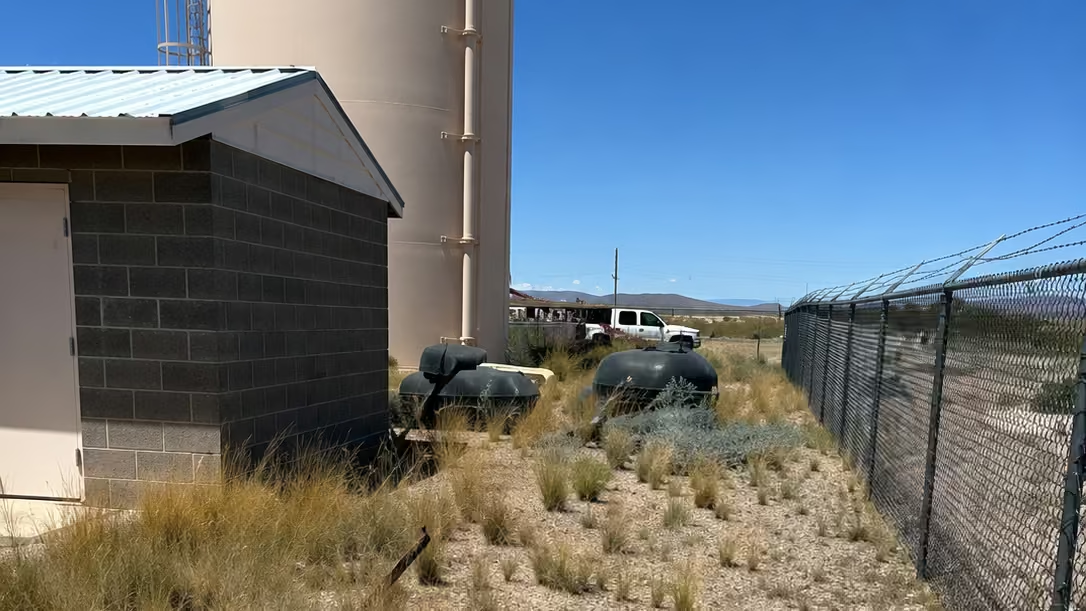
Elevated iron and manganese in Duncan's downtown wells blocked ADEQ approval of a planned interconnect with the Hunter Estates system. Rather than an expensive treatment plant, ADC designed a right-sized orthophosphate dosing system that sequesters the metals and provides lead and copper corrosion control in one step, clearing the path to a unified system. ADC also delivered a USDA-format preliminary engineering report charting the town's wastewater future: sewer extension to septic-served Hunter Estates, infiltration rehabilitation, and phased treatment improvements.
Town of Miami
Miami, AZ
Design Flow: 0.64 million gallons per day
Treatment: Activated sludge producing Class A+ reclaimed water for mining reuse and aquifer recharge
Application: Plant-wide improvements returning the facility to full regulatory compliance

Miami's water reclamation facility needed targeted investment, not replacement. ADC's tiered condition assessment identified exactly what mattered: closing a failed sludge pond and replacing it with concrete drying beds, replacing the manual bar screen with an automatic mechanical screen, and upgrading aeration, mixing, and SCADA controls. ADC delivered design, bid documents, and the Aquifer Protection Permit amendment now under ADEQ review, with construction planned for fall 2026. The work will close out the facility's consent order and set the Town up for decades of reliable, efficient operation.

Let's work together.
Already have a project in mind or just want to see if we can help? We’d love to hear from you.